A marsh is a type of freshwater, brackish water or saltwater wetland that is found along rivers, pond, lakes and coasts. Marsh plants grow up out of the water.
Thursday, December 6, 2012
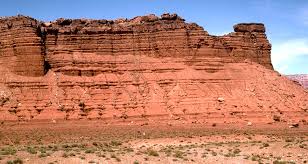
Marshes and Mesas
A mesa is a flat-topped mountain or hill. It is a wide, flat, elevated landformp with steep sides.
A marsh is a type of freshwater, brackish water or saltwater wetland that is found along rivers, pond, lakes and coasts. Marsh plants grow up out of the water.
Wednesday, November 28, 2012
Capes and Prairies
A cape is a pointed piece of land that sticks out into a sea, ocean, lake, or river.
A prairie is a wide, relatively flat area of land that has grasses and only a few trees.
Bays and Dunes
Tuesday, November 27, 2012
Cliffs and Gulfs
Wednesday, November 21, 2012
Valleys and Waterfalls
Today we are learning about valleys and waterfalls.
Niagara Falls is North America's most famous waterfall. A valley is easy to spot. A valleys first
letter is v, and a valley is 2 mountains shaped like a v. A waterfall is when a river falls off steeply, there is a waterfall. The proper term of a valley is, a valley is a low place between mountains.
Thursday, November 15, 2012
Deserts and Lakes
Today we are learning about deserts and lakes. Deserts are very hot.
A desert is a very dry, barren region usually sandy, with little or no trees and a low average yearly rainfall. The Sahara Desert in Africa, the Gobi Desert in Asia, and the Great Victoria Desert of Australia are examples of desert landforms.
A lake is a large body of water surrounded by land. Famous lakes of the world include Lake Superior in North America, Lake Baikal in Russia, Loch Ness in Great Britain, and Lake Victoria in Africa. The desert is one of the hottest places to survive.
Tuesday, November 13, 2012
Latitude and Longitude
Today we are learning about latitude and longitude. Latitude is the angular distance north or south from the equator to a particular location. The equator has a latitude of zero degrees. The North Pole has a latitude of 90 degrees North; the South Pole has a latitude of 90 degrees South.
The equator has zero latitude.
Longitude is the angular distance east or west from the north-south line that passes through Greenwich, England, to a particular location. Greenwich, England has a longitude of zero degrees. The farther east or west of Greenwich you are, the greater your longitude. Midway Islands (in the Pacific Ocean) have a longitude of 180 degrees (they are on the opposite side of the globe from Greenwich). The prime meridian has zero longitude.
The equator has zero latitude.
Longitude is the angular distance east or west from the north-south line that passes through Greenwich, England, to a particular location. Greenwich, England has a longitude of zero degrees. The farther east or west of Greenwich you are, the greater your longitude. Midway Islands (in the Pacific Ocean) have a longitude of 180 degrees (they are on the opposite side of the globe from Greenwich). The prime meridian has zero longitude.
Islands and Volcanos
Tuesday, November 6, 2012
Plateaus and Penninsulas
Thursday, October 25, 2012
Glaciers and Hills
Some effects if you live near a glacier are you have to watch out for landslides.
A hill is a piece of land that rises higher than everything surrounding it. It looks like a little bump in the Earth. Since theyre higher than everything around them, hills are good places to get a nice view.
A glacier is a huge mass of ice that moves slowly over land. The term glacier comes from the French word glace (glah-SAY), which means ice. Glaciers are often called rivers of ice. A glacier is a huge mass of ice that moves slowly over land. The term glacier comes from the French word glace (glah-SAY), which means ice. Glaciers are often called rivers of ice.
Wednesday, October 24, 2012
Oceans
Today's lesson is oceans.
Oceans are a very large body of water. There are 5 different oceans on Earth.
If you live near a ocean you definitely need to watch out for tsunamis and hurricanes. Atlantic, Pacific, Indian, Artic, and the Southern are the 5 oceans. The farther you get from the oceans the hotter it can get. No other planet is able to have water.
Tuesday, October 23, 2012
Plains
Hello again this one is about plains. A plain is a area of nearly flat land. (no hills or mountains)
In the USA there is a very large area of plains called the Great Plains in the middle of the USA. Another large area of plains in the USA is the Coastal plains on the Atlantic side of the USA.
Vocab Chart
- Coastal Plain
- Plain
- Great Plains Plain
Mountains and Landforms
Today I will teach you about the word landforms and mountains. A land form is the shapes that makes up the earth like a mountain. Also when you see a word underlined it is a land form. If there is a word that you don't know ask somebody else. If a word is in bold print is a description. Mountains is our first land form, here we go!!
A mountain is a raised land with a high peak. The highest mountain on Earth is Mount Everest, in Nepal.
If you live close to a mountain you have to watch out for landslides (avalanches)
Vocab Chart
1. Landform
2.Mountain
2.Mountain
Here are the highest mountains,
- Mount Everest
- K2
- Kanchenjunga
- Lhotse
- Makalu
Wednesday, October 17, 2012
Hello
Hi I'm Brandt,
I'm doing this for a social studies project. I go to Bermudian Springs Elementery School. I am very funny. I hope you have a good time on Brandt's Blog. And remember this isn't facebook, landform talk only. But I don't mind if you post some comments though. Here is a good website to learn more about landforms.
Bye
http://education.nationalgeographic.com/education/encyclopedia/?ar_a=1
I'm doing this for a social studies project. I go to Bermudian Springs Elementery School. I am very funny. I hope you have a good time on Brandt's Blog. And remember this isn't facebook, landform talk only. But I don't mind if you post some comments though. Here is a good website to learn more about landforms.
Bye
http://education.nationalgeographic.com/education/encyclopedia/?ar_a=1
Subscribe to:
Comments (Atom)